
Before clindu.st, I used the name PROFACER.
It was not introduced as a brand or launched as a finished identity. It was simply the name attached to drawings, texts, folders, and experiments on my 486DX. The surviving files run from 1998 to 2005.
The archive is not a clean timeline. It is a working disk: DOS and Windows applications, repeated files, renamed pictures, diary entries, school work, music notes, and small messages left in places where nobody else was expected to look.
DRAW
The folder PROFACER/DRAW contains 45 surviving graphics: 44 PCX files and one BMP.
They are not 45 separate projects. They form families—copied bases, alternative marks, colour changes, cleaner versions, reversals, signatures, and attempts that went somewhere else. Selecting only one polished image would remove the actual subject: repetition.
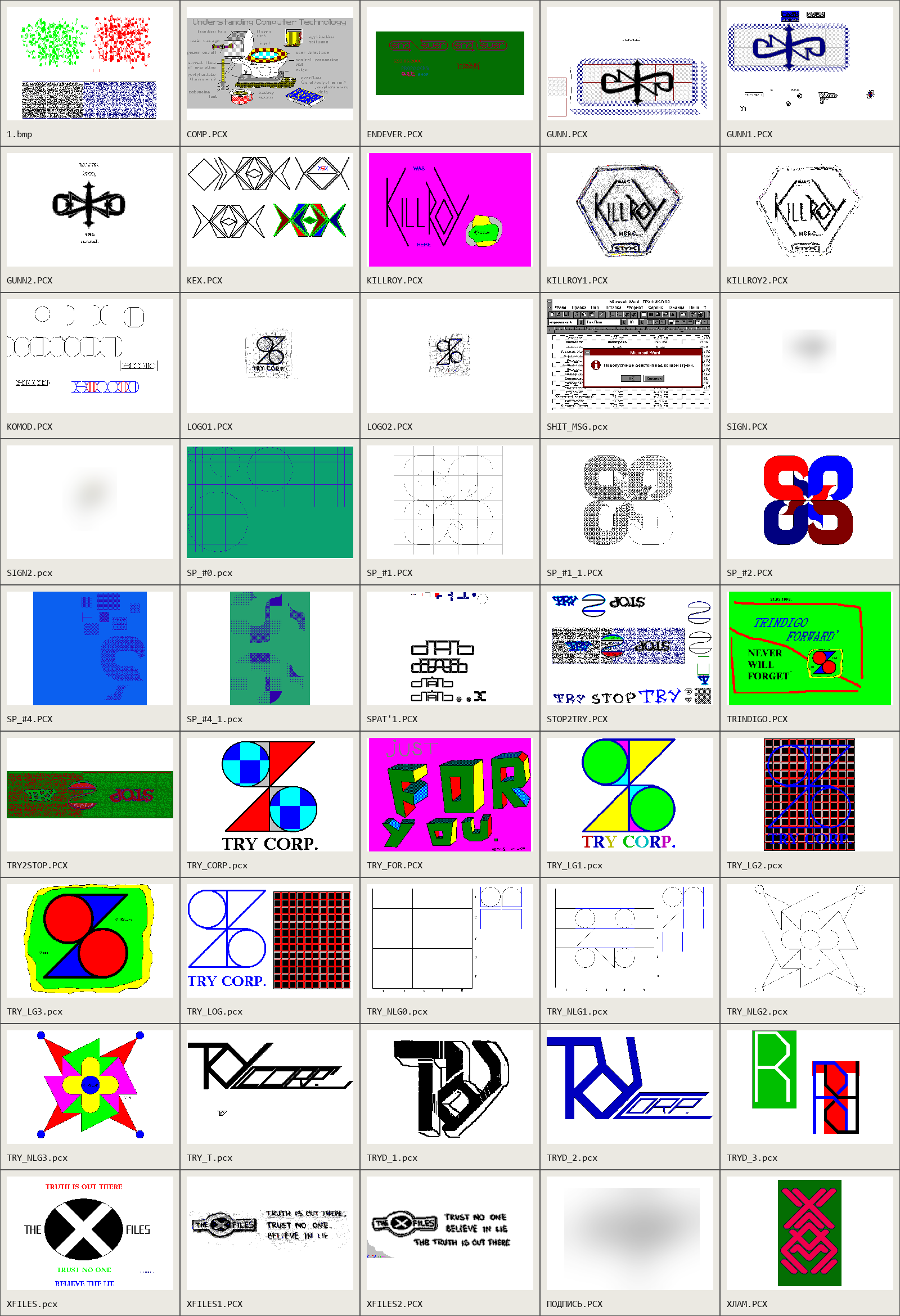
The largest family circles around TRY / STOP / CORP. It moves between phrases, geometric marks, and imaginary corporate identities: STOP2TRY, TRY2STOP, TRY_CORP, TRY_LG, TRY_NLG, and TRYD. Circles, diagonals, grids, and compressed wordmarks keep being taken apart and assembled again.
The filenames are part of the work. “Try to stop” becomes “stop to try.” TRY CORP. becomes a logo system for an organisation that did not exist.
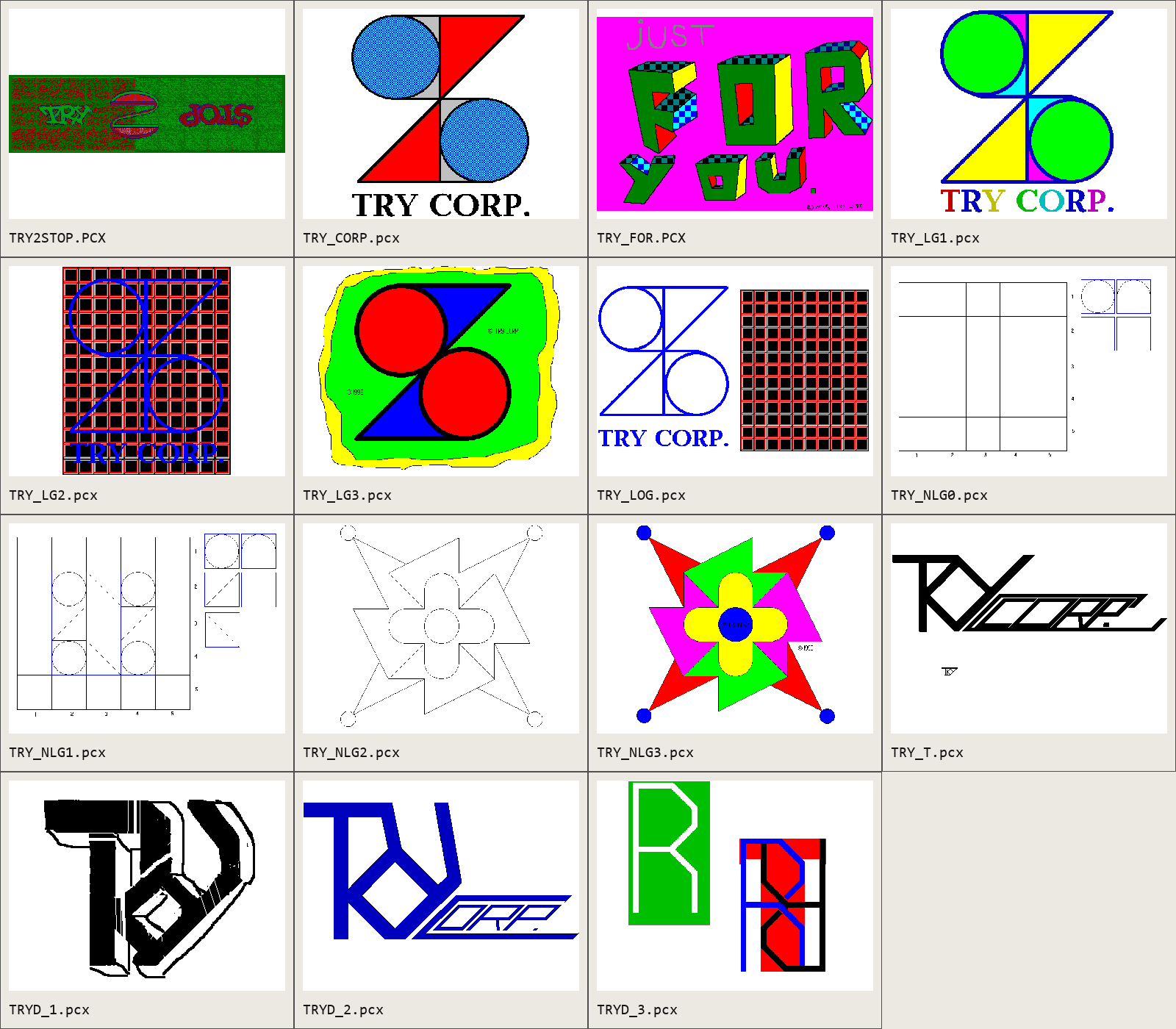
KILLROY starts as a bright, loose image and returns in two tighter emblem-like versions.
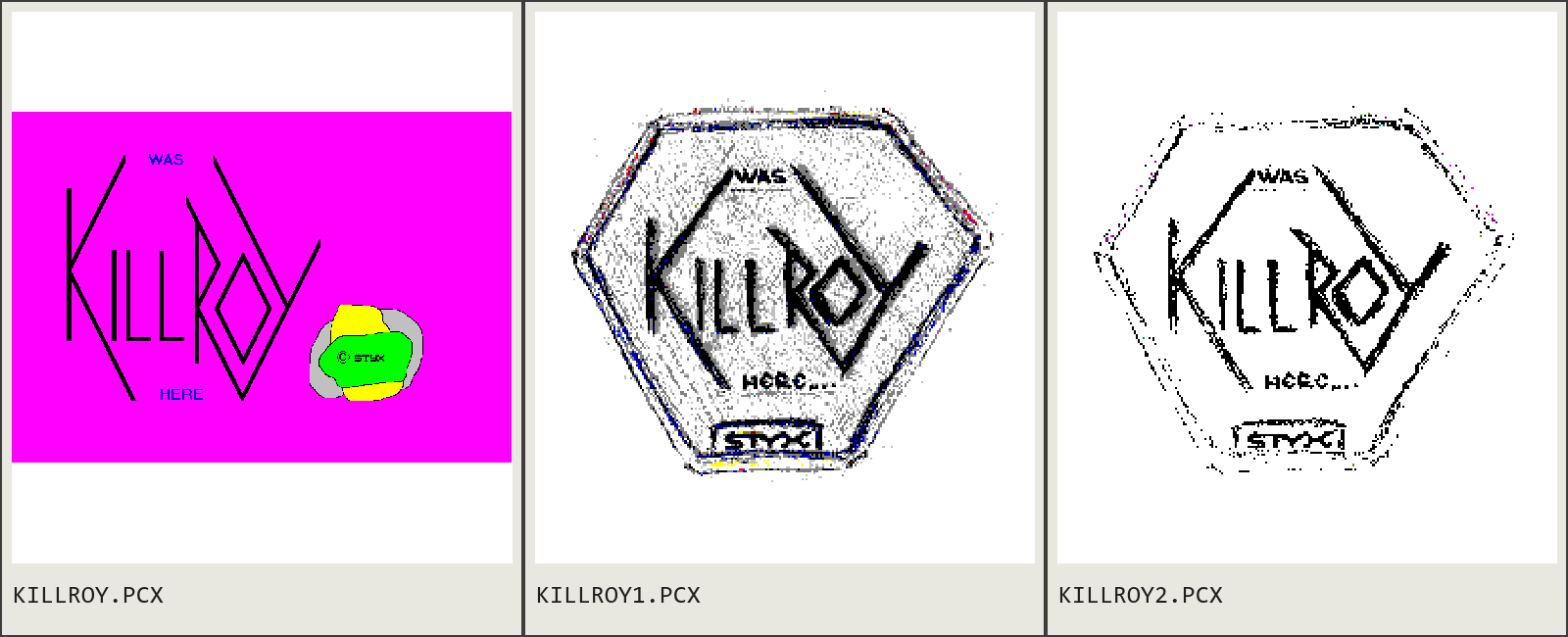
Elsewhere, the SP_# sequence and the drawing called СПАТЬ push letters into constructed shapes. TRINDIGO combines a slogan with another geometric mark. GUNN develops a symmetrical sign across several files. KOMOD is a sheet of outlined letterforms. SIGN, SIGN2, ПОДПИСЬ, LOGO1, and LOGO2 record signature and logo studies without pretending that one of them had become final.
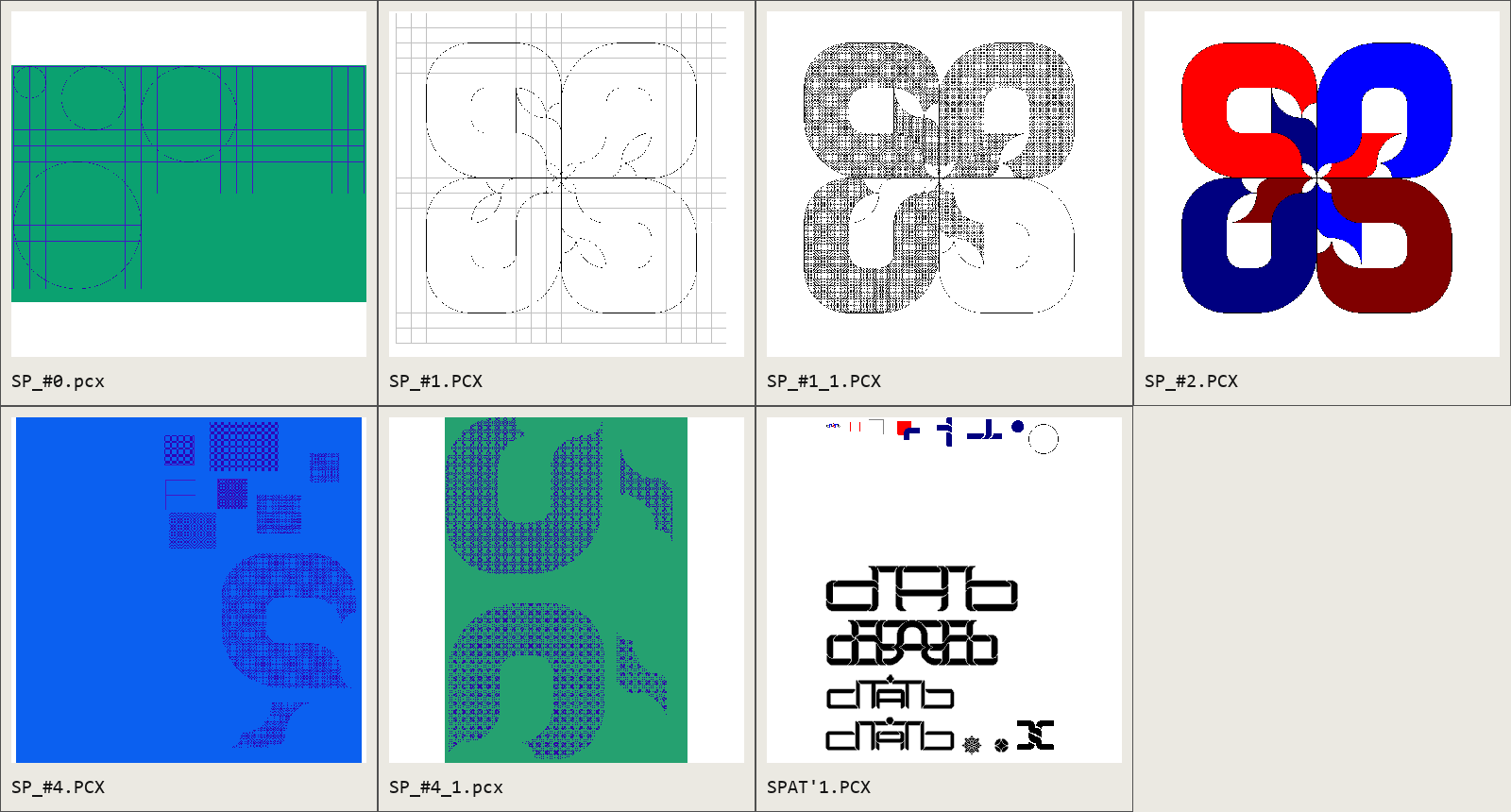
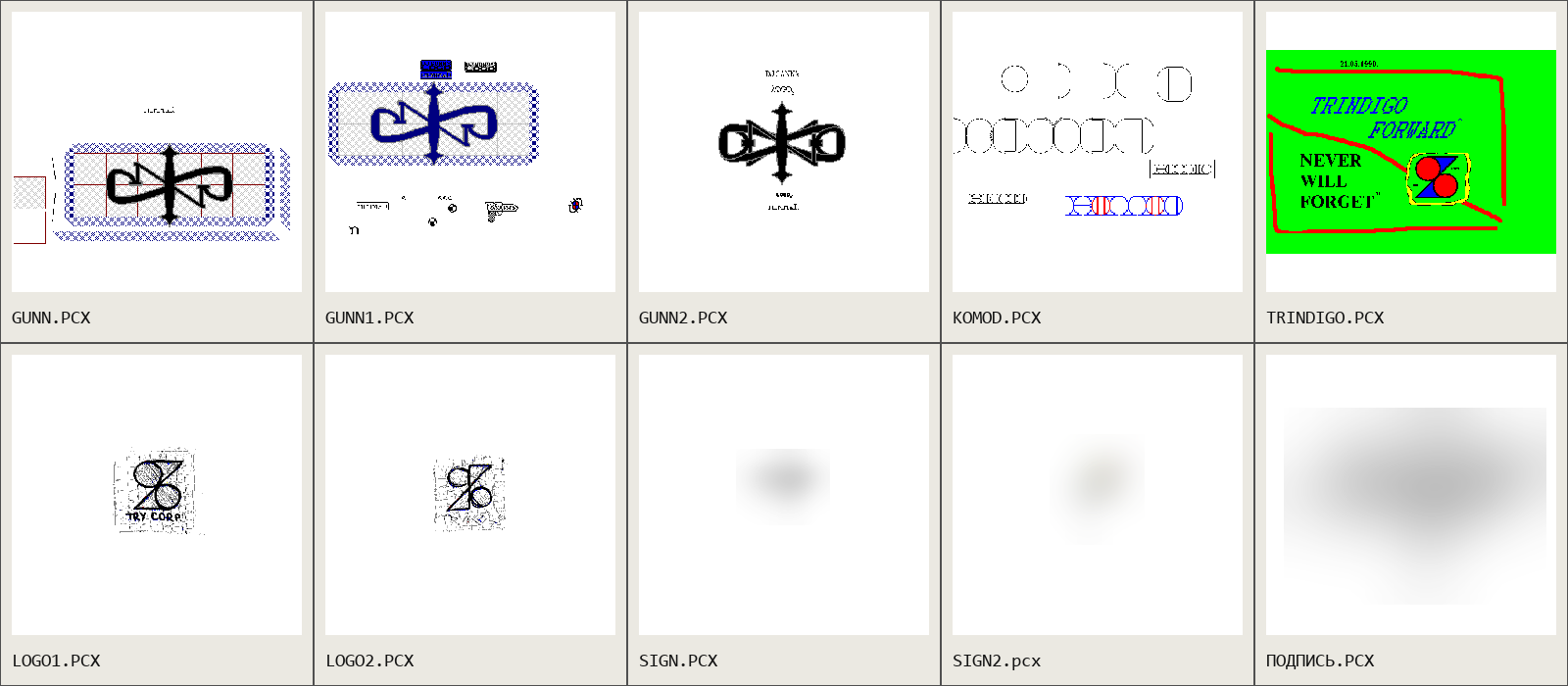
The three signature studies are blurred because I still use this signature today. Their filenames remain visible, but the marks do not.
the machine was the studio
The 486DX lived between DOS and Windows. Its AUTOEXEC.BAT loaded the mouse, Cyrillic support, and the sound setup, cleared the screen, and ended with two letters:
NCNorton Commander was the map. Windows associated PCX and BMP files with PaintBrush. Word 2 handled documents; CA Paint was also installed and still remembered TRY2STOP.BMP in its recent-file list. The tools were not hidden behind a library or cloud account. Their paths, formats, palettes, and limits remained visible in the work.
The same period also included practical design: student-newspaper layout and masthead work, and logos for student groups. PROFACER was partly a private drawer of experiments and partly the name attached to work that had to function for somebody else.
dates inside the files
Filesystem timestamps help, but a diary saved in BOOK4.DOC gives several drawings firmer dates. The diary remains private; only its creation evidence is used here.
On 6 July 2000 I was working on the slogans in XFILES2.PCX and planning a logo. The underlying images had been scanned from the back cover of a school notebook; KILLROY was in that notebook too.
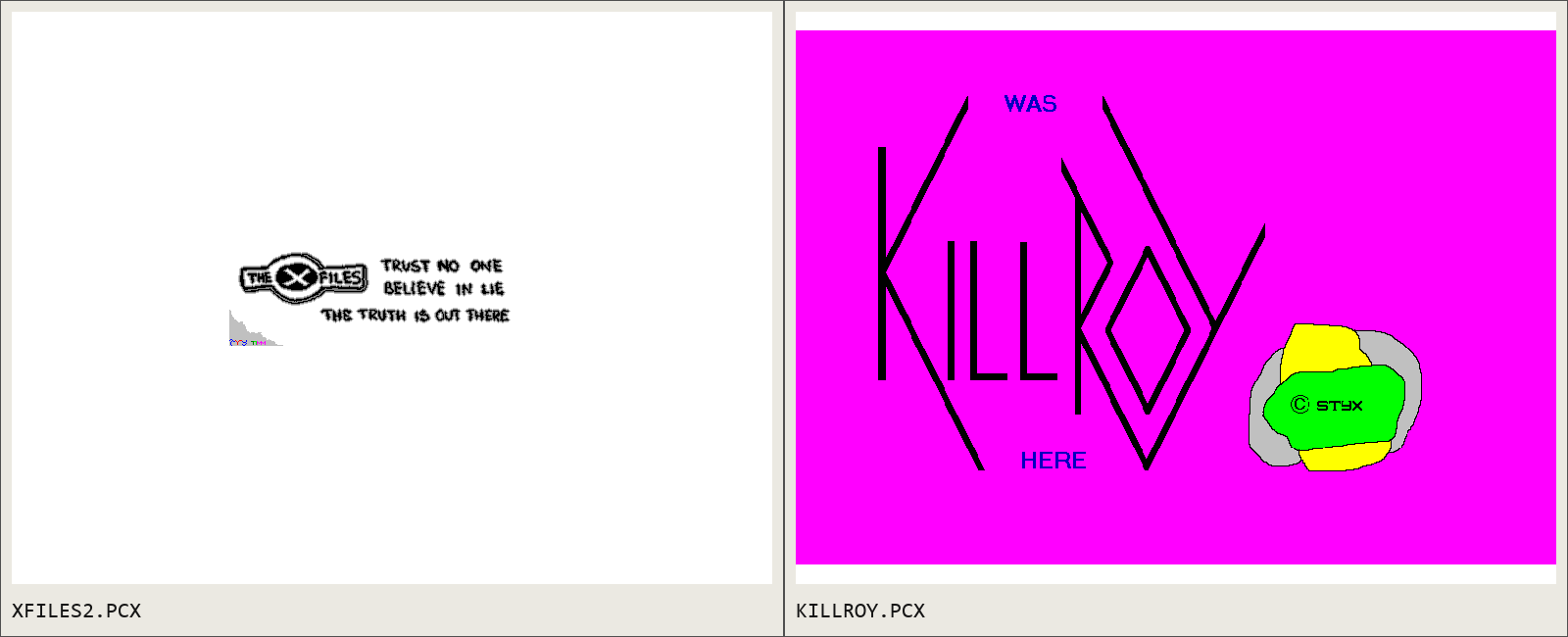
On 15 July I began transferring notebook entry no. 527—“try to stop”—into PaintBrush. The following day, after roughly three hours of sleep, try2stop was finished.
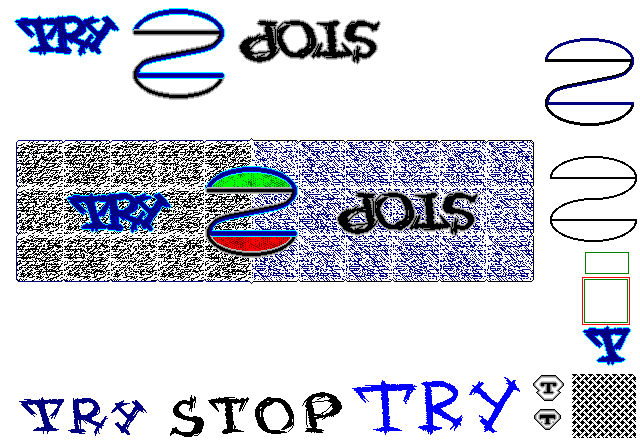
On 15 August the idea for СПАТЬ arrived while I was falling asleep. I left myself the instruction to draw it.
Several files carry timestamps from 29 July 2005. That late cluster may describe copying, conversion, or another pass through the folder rather than the original drawing dates. I am treating 1998–2005 as the surviving archive range, not a perfect production calendar.
text beside the pictures
PROFACER was not only graphics.
MUSIC#01.DOC, dated 26 September 2001, begins:
LET THE MUSIC PLAY FOREVER
It is a music column about Muse’s Showbiz, Indigo’s One, and Dire Straits’ Brothers in Arms. I begin by saying that I am not a music critic, then write exactly as a listener: subjective, excitable, and willing to follow an album into whatever it makes me imagine.
At the root of the drive, a 14-byte file called DIRINFO contains one line:
no one but youThat is the whole file.
TRY.DOC
Another root-level file, TRY.DOC, is dated 18 December 2003.
It is an encrypted Word 2 document. In 2026, modern Word initially refused to open it because Word 2 and earlier binary documents were blocked by its File Block settings.

The document header declared a text area only two bytes long. A blank NORMAL.DOT from the same archived Word installation supplied the matching structure: reversing the old XOR mask produced eight CP1251 characters followed by Word’s exact padding, and the file’s stored verifier matched.
The password was:
лайфсакс
“Life sucks,” sounded out in Cyrillic.
After temporarily allowing the format and entering the password, the document opened to a blank page. With formatting marks visible, it contained only one paragraph mark.
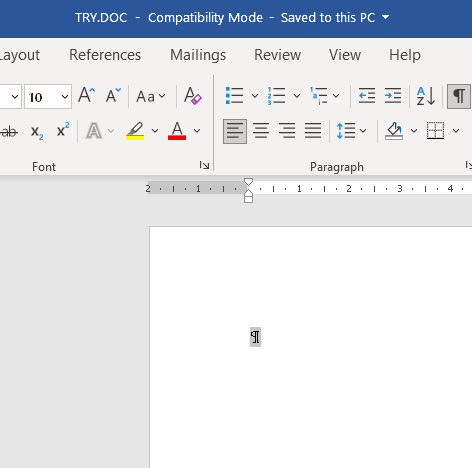
So the document was not empty. The body had nothing to say because the password was the message.
before clindu.st
I do not want to reorganise this material into a cleaner history than the one on the disk.
The PCX files, reversed names, duplicates, notebook scans, small Word documents, and one-line directory note belong together. They show a habit already in place before clindu.st: make a sign, test it, rename it, write beside it, and leave the versions where they fell.
PROFACER was the name on that folder. clindu.st came later.
Archive, original work, and provenance — PROFACER / CLINDUST. Recovery, conversion, and implementation partnership — Cody / Codex.