
photography / archive / self-portrait
An eighteen-year longitudinal study of one face, several interfaces, and the repeated failure to leave well enough alone.
- dated episodes
- 22
- source files
- 193
- images
- 175
- years observed
- 18
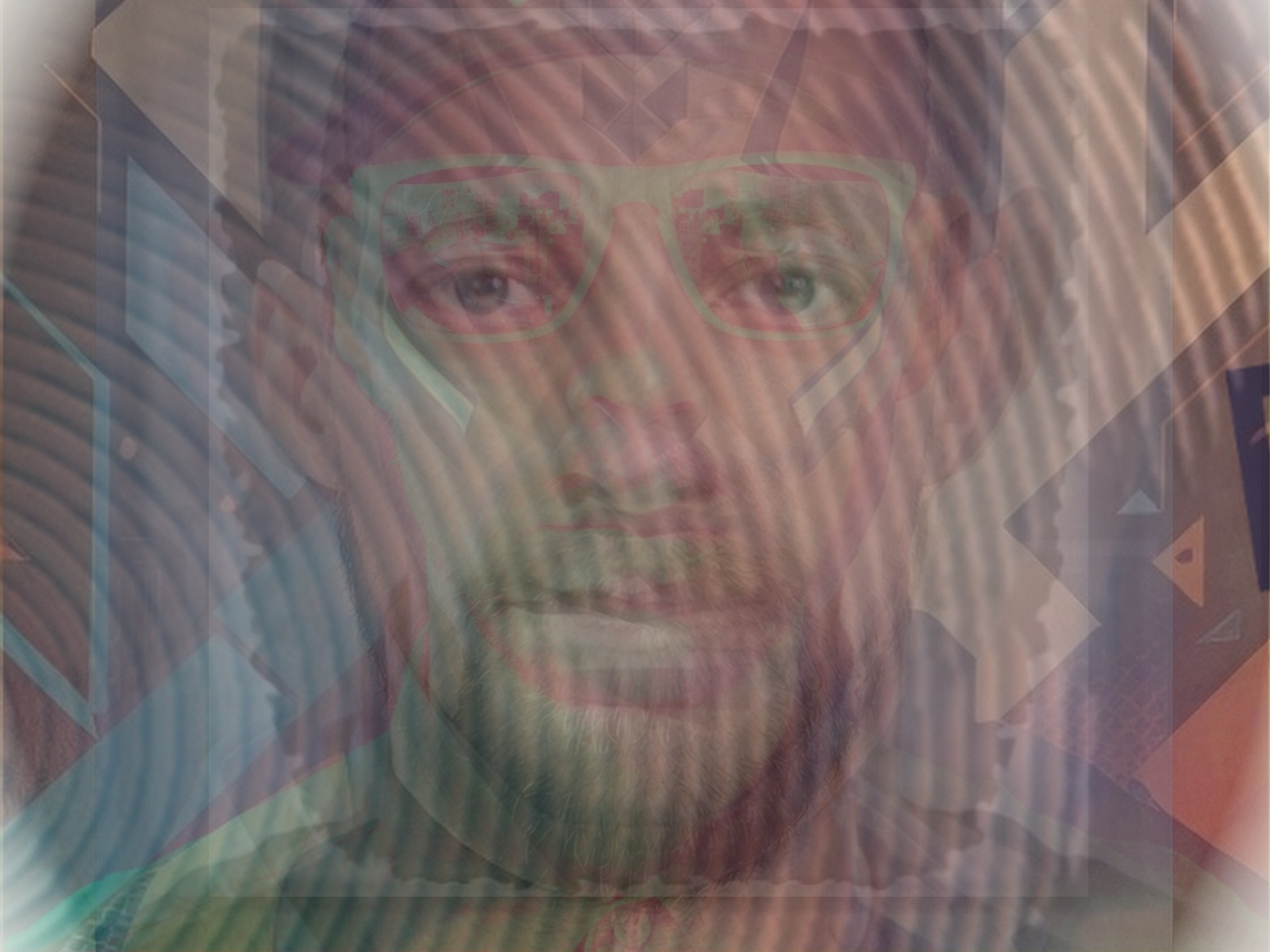
There are people who choose a profile picture and keep it for several years.
This study is not about those people.
It examines an eighteen-year archive belonging to a single subject who repeatedly photographed, cropped, filtered, redrew, colour-separated, vectorised, distressed and eventually regenerated his own face in search of a small square image that would appear beside messages on the internet.
The archive begins in 2008, when making an avatar required a camera, image-editing software and a willingness to spend an unreasonable amount of time creating torn edges. It ends, provisionally, in 2026, when six photographs were submitted to an artificial intelligence system in the hope that it might produce one accurate portrait.
It produced several different men and a discussion about the geometry of the human skull.
Progress is complicated.
Abstract
This paper analyses 175 images stored across 22 dated folders between October 2008 and May 2026.
The dataset includes photographs, manual digital compositions, video stills, line drawings, duotone experiments, QR-code interventions, early mobile filters, generative portraits and several unsuccessful attempts to convince an image model that the same face should remain the same width from one iteration to the next.
The results suggest that an avatar does not primarily document what a person looks like.
It documents:
- what tools were available;
- what the internet expected a person to look like;
- what the subject found amusing at the time;
- and how much technical effort could be justified by an image eventually displayed at approximately forty pixels wide.
The subject remains recognisable throughout, although several algorithms dispute this finding.
1. Materials and methods
The source archive occupies approximately 239 megabytes and contains:
| Type | Count |
|---|---|
| JPG/JPEG images | 168 |
| PNG images | 6 |
| GIF animations | 1 |
| PSD working files | 9 |
| XCF working files | 4 |
| AVI video files | 1 |
| Picasa configuration files | 4 |
The four .picasa.ini files were excluded because even this project has ethical limits.
Images were organised by folder date rather than by the date on which they were actually used as avatars. This introduces uncertainty, but uncertainty is a traditional feature of both archaeology and personal file management.
No attempt was made to determine the subject’s “true” appearance. The 2026 experiments demonstrate that this concept becomes unstable as soon as three portrait photographs, one warm light source and a language model enter the same room.
The following broad periods were identified:
| Period | Images | Dominant method |
|---|---|---|
| 2008–2011 | 104 | manual intervention |
| 2013–2019 | 15 | selective restraint |
| 2021–2026 | 56 | filters and synthetic proliferation |
The sharp decline between 2011 and 2013 may indicate maturity, fatigue or the temporary discovery of other things to do.
2. The manual era, 2008–2009
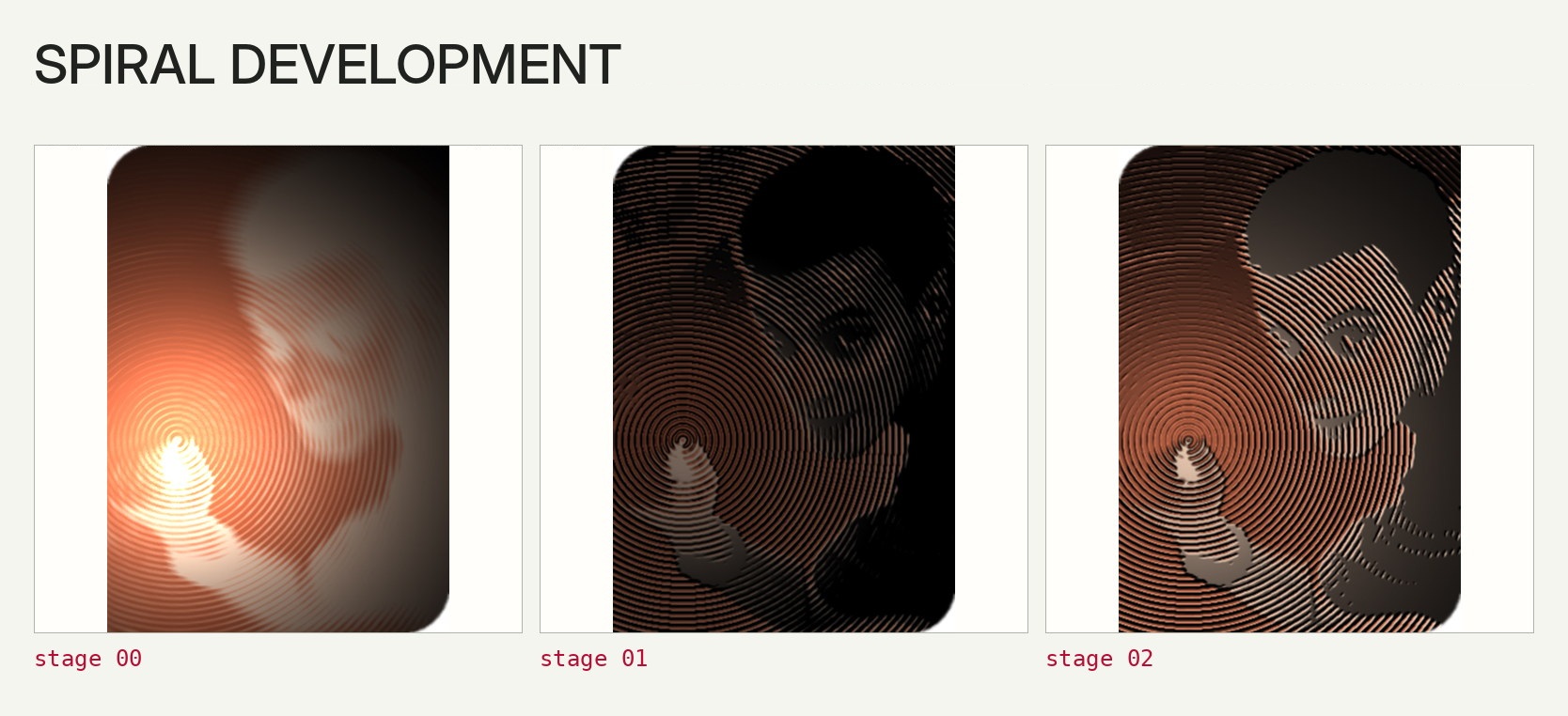
The earliest surviving experiment does not begin with a face.
It begins with an overhead office photograph, a red shirt, a desk, a keyboard and a point of light surrounded by concentric lines. The face emerges only after several stages, as if summoned by a graphic-design ritual.
This is important. In 2008, an avatar was not merely selected. It was manufactured.
The process left evidence:
- multiple exported versions;
- a 2.3 MB PSD;
- rounded corners;
- visible scan lines;
- and the strong belief that an image became more digital if enough circles were placed over it.
The avatar was less a portrait than a technical demonstration containing a person somewhere in the middle.
A month later, the subject converted a photograph into high-contrast line art.
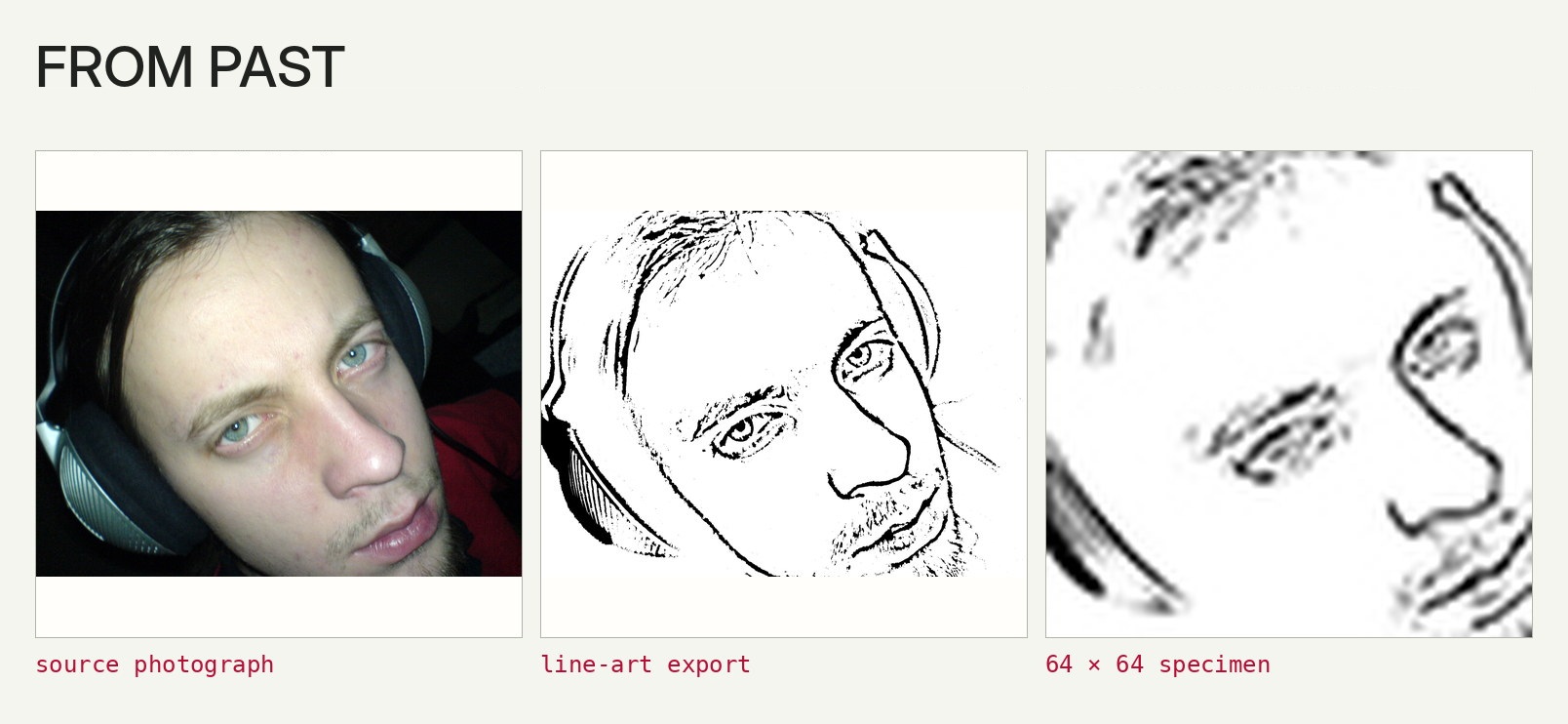
The filenames identify the result as an “avatar from past”, although the past in question was probably several weeks earlier. Digital history was shorter then.
By January 2009, the visual language had become darker.
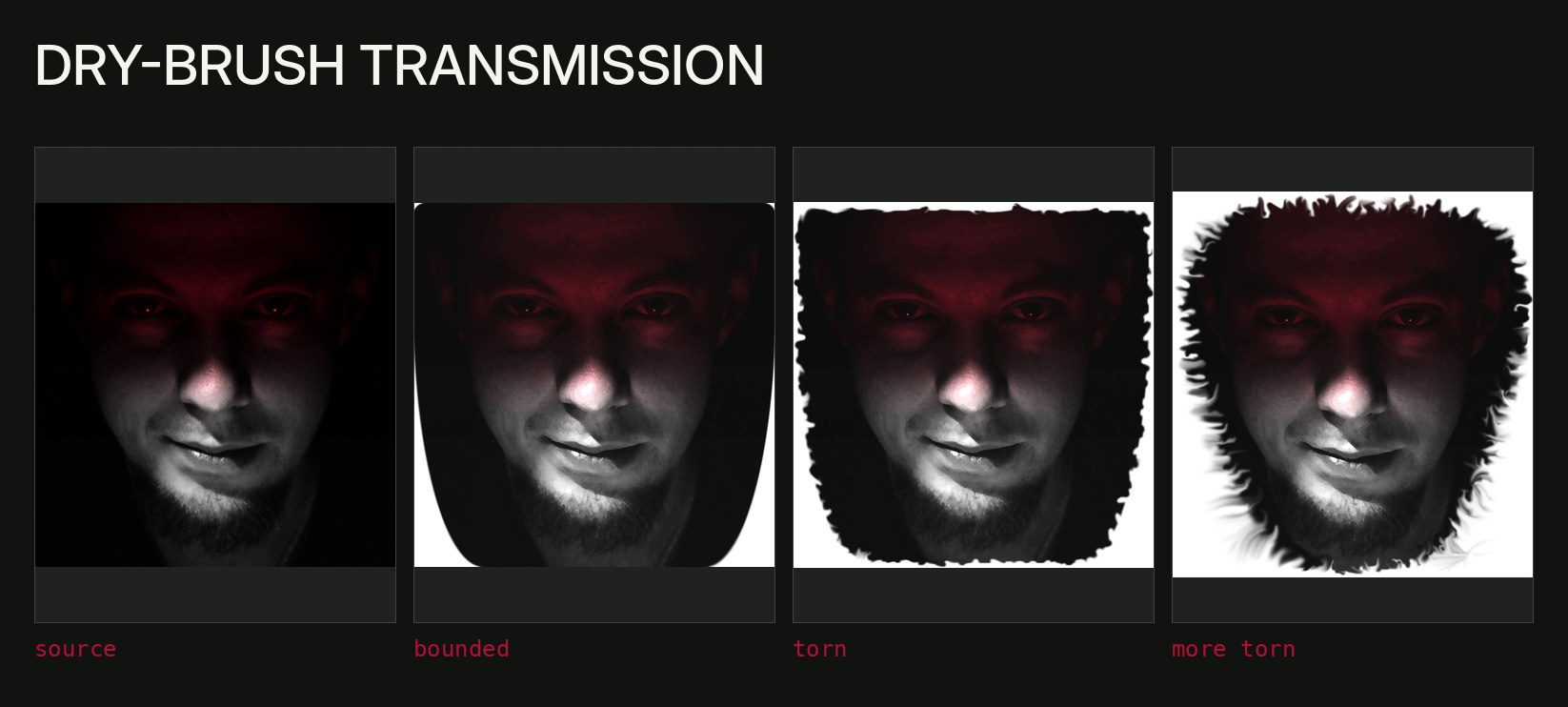
The face is illuminated from below, surrounded by red-black darkness and treated with brushes named bounded, dry and torn. The result suggests either a profile image or the final transmission from a damaged spacecraft.
The technique was handmade, imperfect and extremely specific to its era. A current filter could reproduce the effect in seconds, which would remove nearly all of its charm.
The charm resides in the unnecessary labour.
3. The film-strip hypothesis
In January 2009, the subject extracted frames from an AVI file and arranged them vertically inside a simulated strip of photographic film.
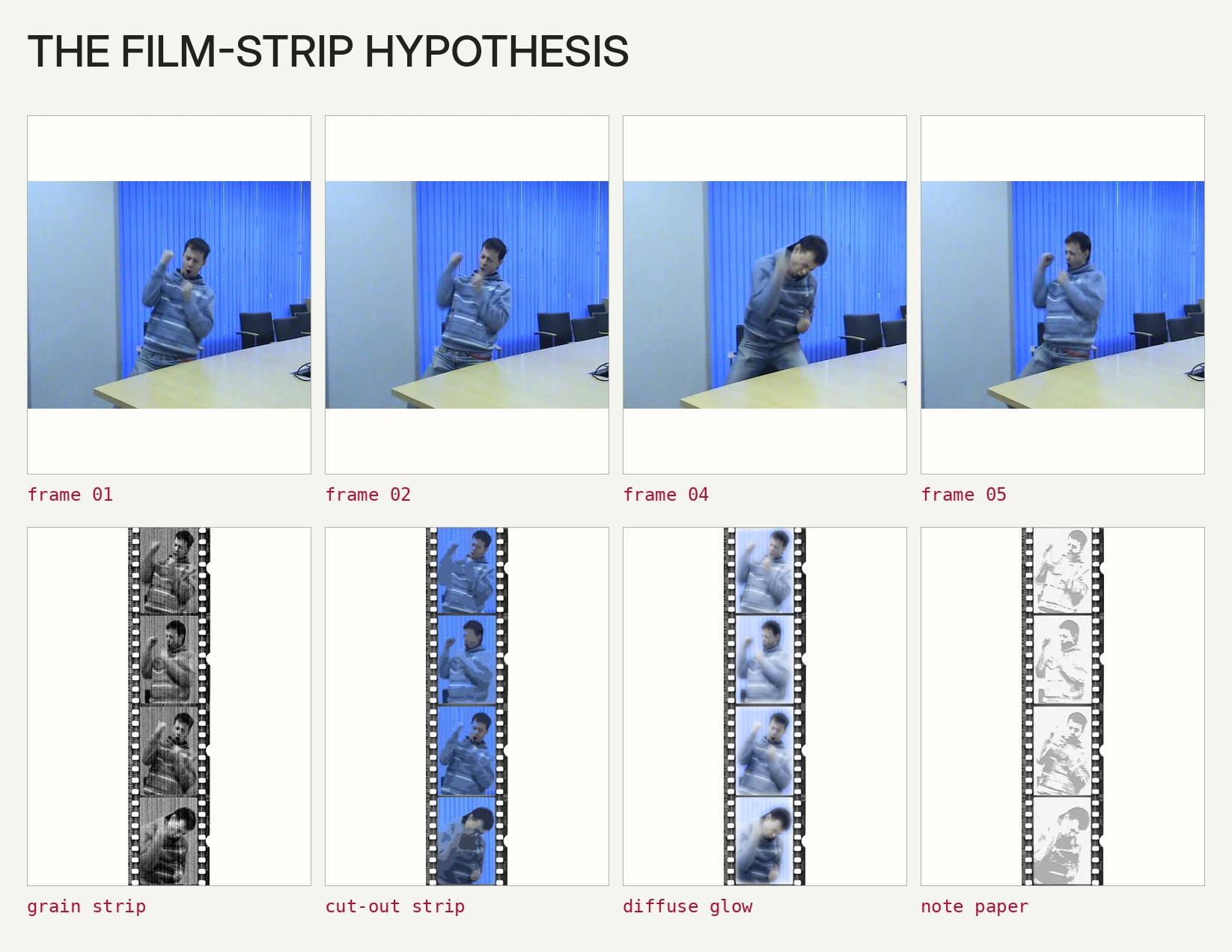
The image combines three generations of media:
- a moving digital video;
- the visual grammar of chemical film;
- a tiny internet avatar pretending to be both.
This was common in early digital culture. New technology frequently reassured users by dressing itself as older technology.
Photo applications still contain paper borders, shutter sounds and film grain. Digital files have never been entirely confident about being digital.
The vertical format was also magnificently unsuitable for most avatar interfaces. This did not prevent the experiment.
Science records what happened, not what should have happened.
4. Red walls, half-faces and the discovery of the crop
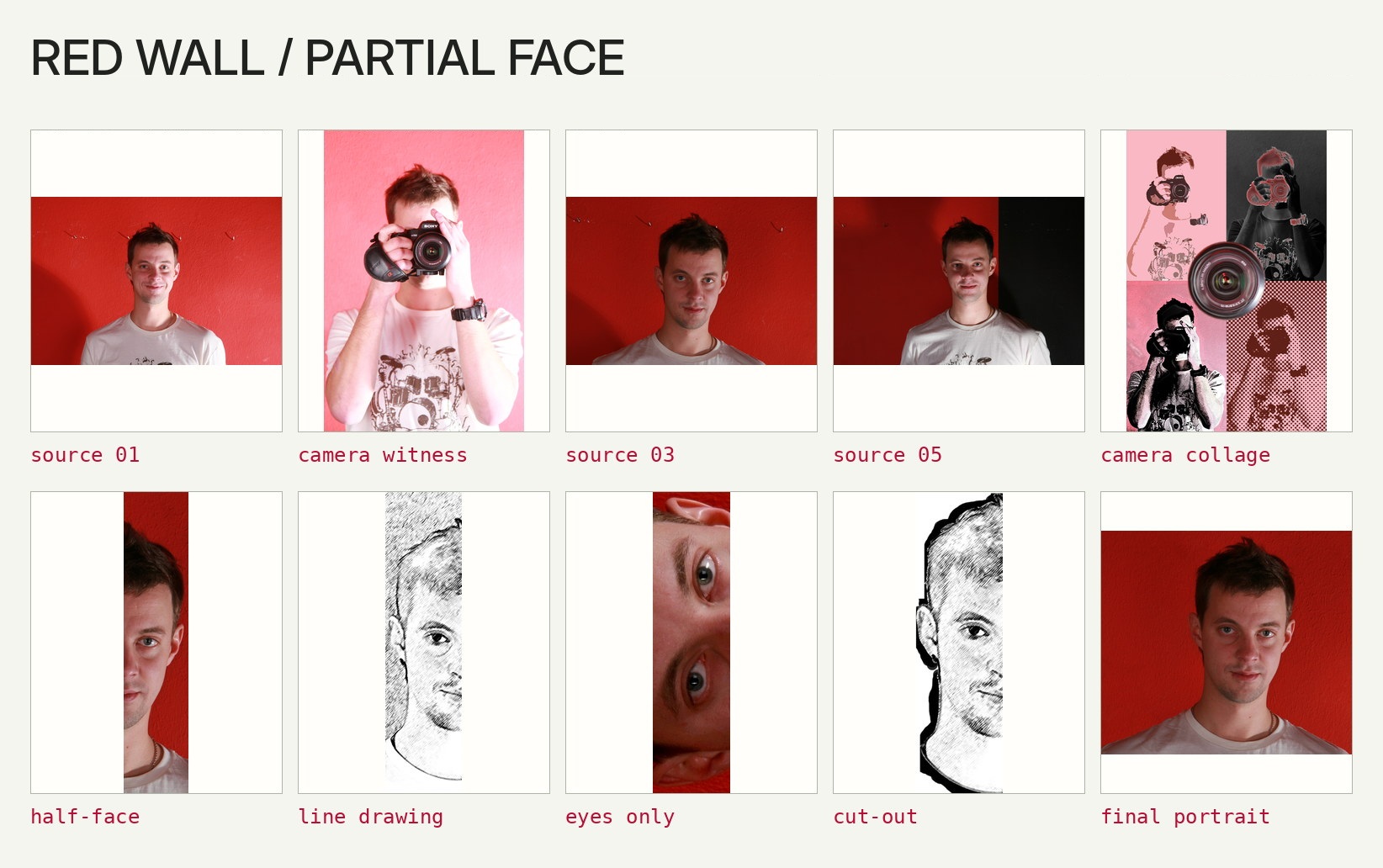
November 2009 produced nineteen images from a single session.
The source material is relatively straightforward: a young man in front of a red wall, occasionally holding a camera. The derivative material is not.
The face is:
- divided vertically;
- reduced to one eye;
- moved against large fields of white;
- converted into pencil lines;
- mirrored;
- repeated;
- and placed inside a camera collage.
The full portrait was apparently considered too obvious.
This period demonstrates an important principle of avatar design:
When the available square contains one face, the natural response is to remove at least half of it.
The subject was not hiding. He was composing.
These are not the same activity, although the evidence looks similar.
5. The beanie period and the rise of documentary evidence
By 2010, the archive begins to include more conventional photographs.
There are sunglasses, outdoor light, a black beanie, a red hoodie and a city observation platform. The subject smiles in several frames, a behaviour later suppressed by professional avatar convention.
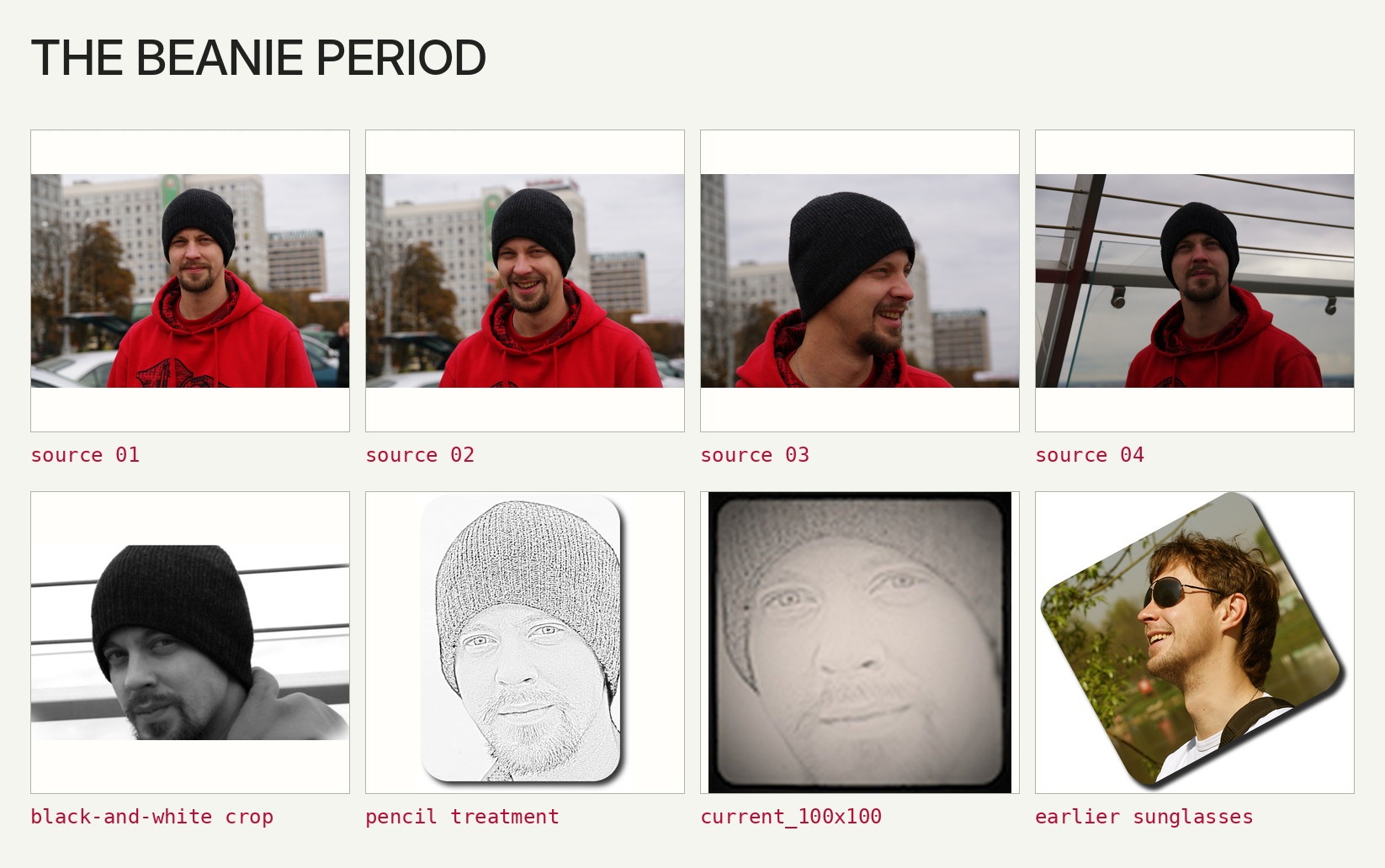
The key development is not the clothing. It is the coexistence of two competing theories:
- The photograph is already an avatar.
- The photograph must first be converted into something that looks less like a photograph.
Neither theory wins.
The folder contains raw camera images, black-and-white crops, bright pencil effects, rounded rectangles and a final file called simply current_100x100.jpg.
The name suggests resolution, certainty and administrative closure.
It was followed by eighteen more years of work.
6. Festival anthropology and the smiling specimen
The March 2011 folder contains 26 images, most of them taken outdoors at what appears to be a festival.
Unlike earlier studio sessions, these images were not designed as controlled portraits. The subject is photographed through plastic, against the sky, looking at a red device, laughing, squinting and occasionally failing to notice the camera.
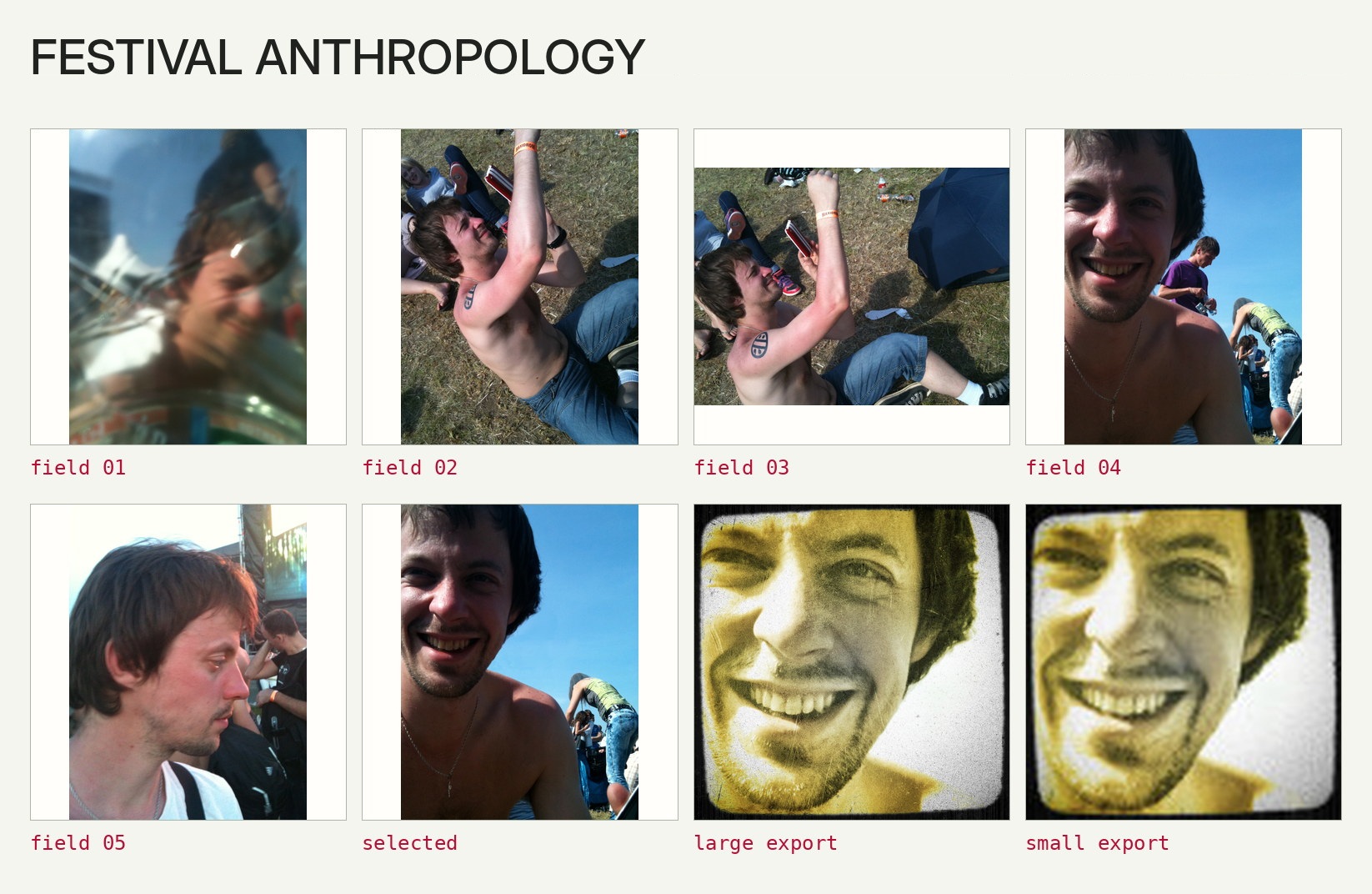
This produces one of the archive’s strongest avatars: a grainy, warm, smiling close-up that feels less engineered than its predecessors.
Naturally, it was still exported in large, medium and small versions.
The case demonstrates that spontaneity is most effective after careful selection, colour treatment, cropping and file naming.
7. The QR-code incident
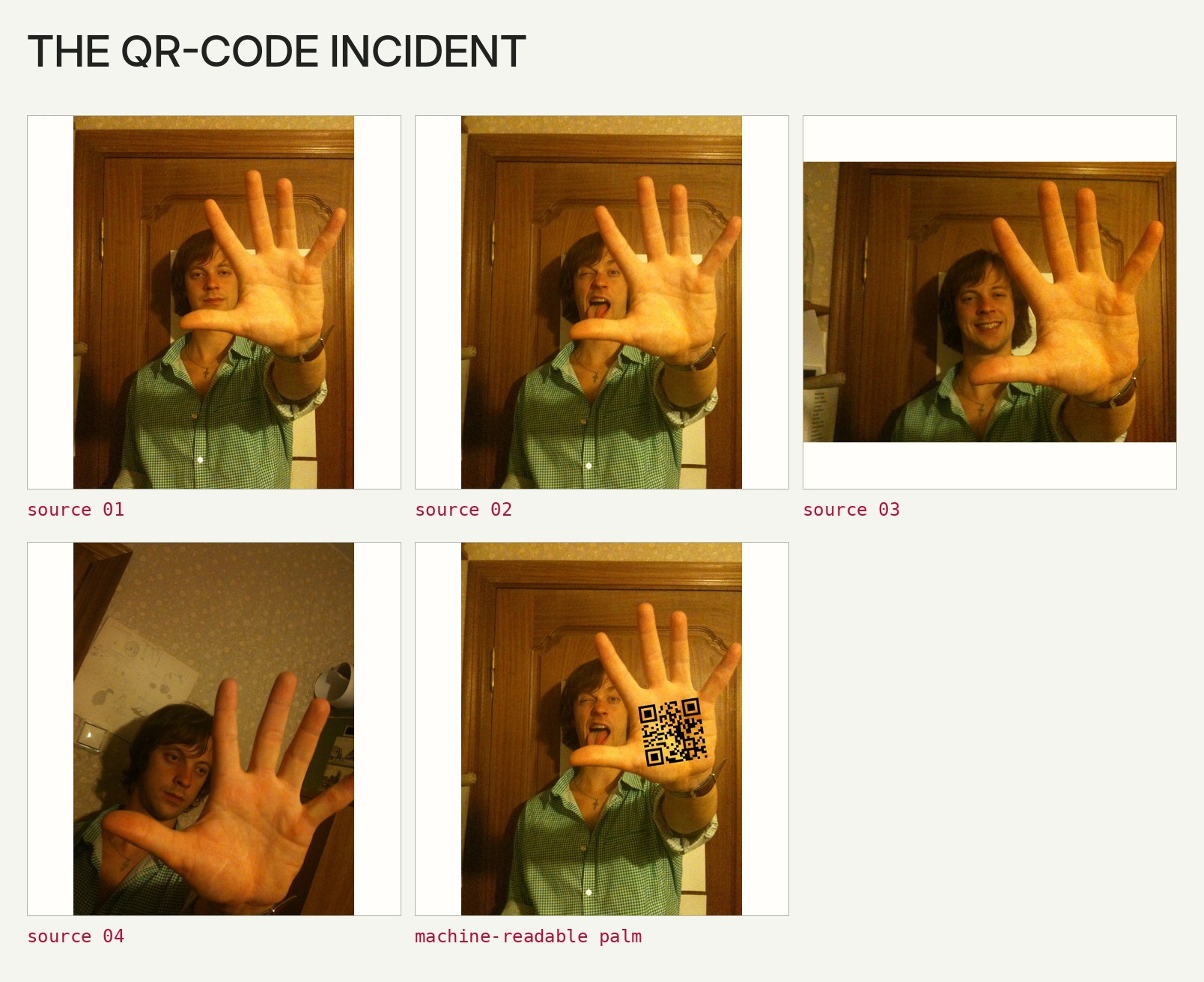
In August 2011, the subject photographed himself holding an open palm towards the camera and placed a QR code on it.
This was technologically fashionable, visually absurd and therefore entirely correct.
The image anticipates several later ideas:
- the body as an interface;
- identity as a machine-readable token;
- the profile picture as a gateway rather than a portrait;
- and the possibility that a face might be less useful than a barcode.
Whether the code still resolves is almost irrelevant. Its true destination was always the year 2011.
8. The brief age of reasonable photographs, 2013–2018
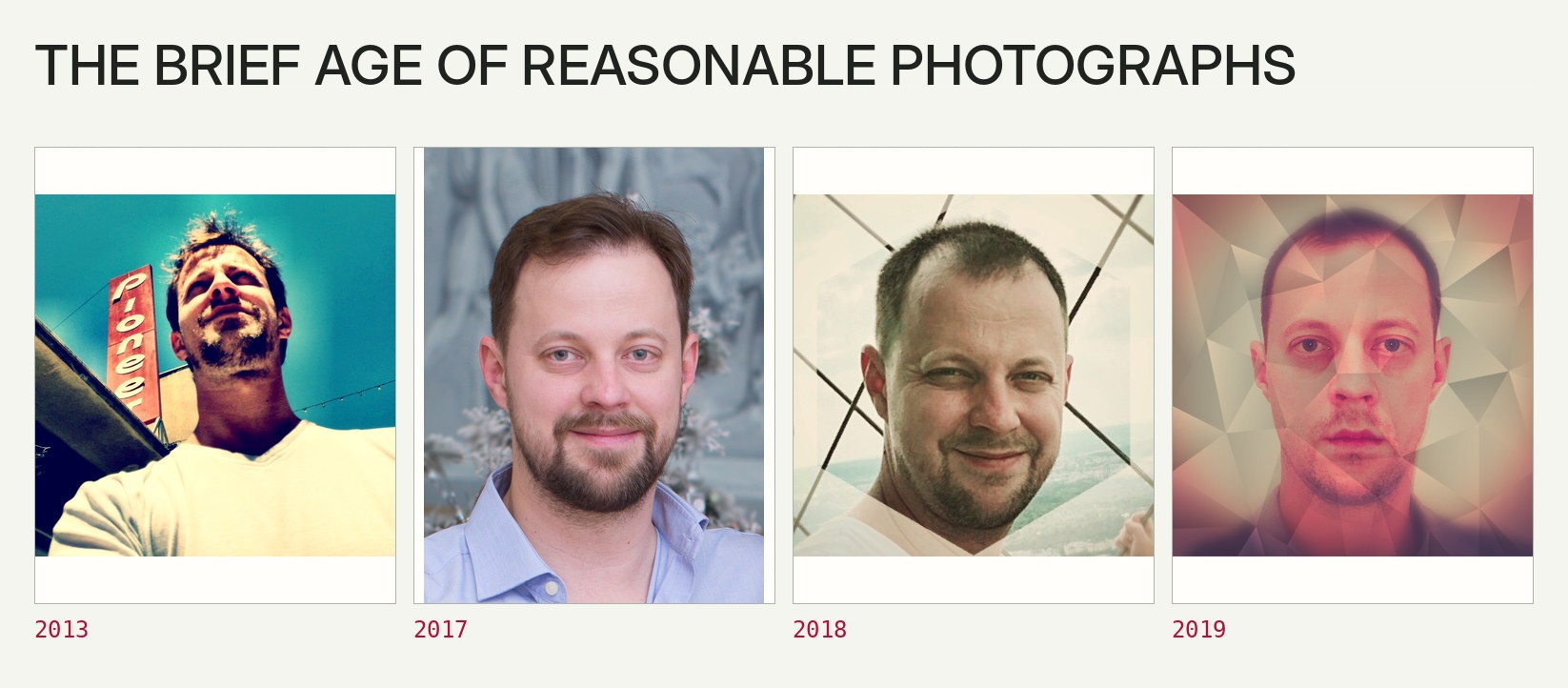
After the intense production of 2008–2011, the archive becomes strangely calm.
One image appears in 2013. One in 2017. One in 2018.
They are recognisable photographs of a person.
The 2017 portrait is particularly suspicious. It contains even lighting, a normal camera angle, a mild smile and no simulated film damage. There are no QR codes, torn brushes or geometric overlays.
The subject may briefly have believed that a profile picture could simply show his face.
The hypothesis did not survive 2019.
9. Duotone as a lifestyle
The September 2019 session contains a cap, mirrored sunglasses, a dark background and eleven colour treatments.
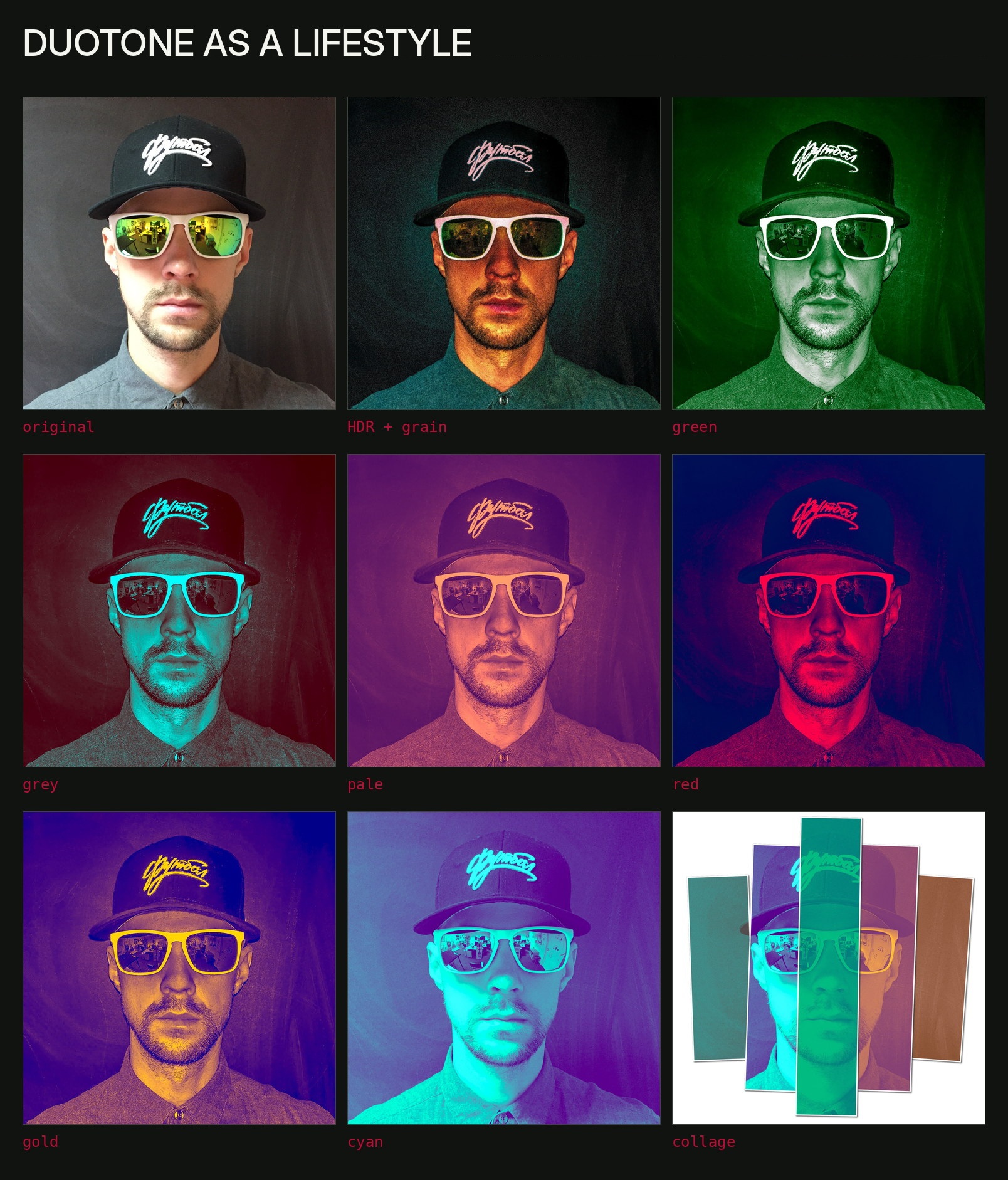
Here the avatar becomes less a photograph than a reproducible mark.
The same frontal pose is preserved while colour changes around it. Green, cyan, red, gold and violet versions operate like skins applied to a fixed character model.
The eyes are hidden behind mirrored lenses. The face becomes symmetrical. The cap introduces a graphic logo above the graphic face.
This is the moment when the subject stops merely having an avatar and begins, however accidentally, to possess a visual identity system.
It was not documented in a brand manual because dignity had not yet completely left the building.
10. Filters learn confidence, 2021–2022
The 2021 session repeats the cap-and-sunglasses structure but introduces a series of automated treatments: green monochrome, red, blue, warm bloom, black and white, and an illustrated version.
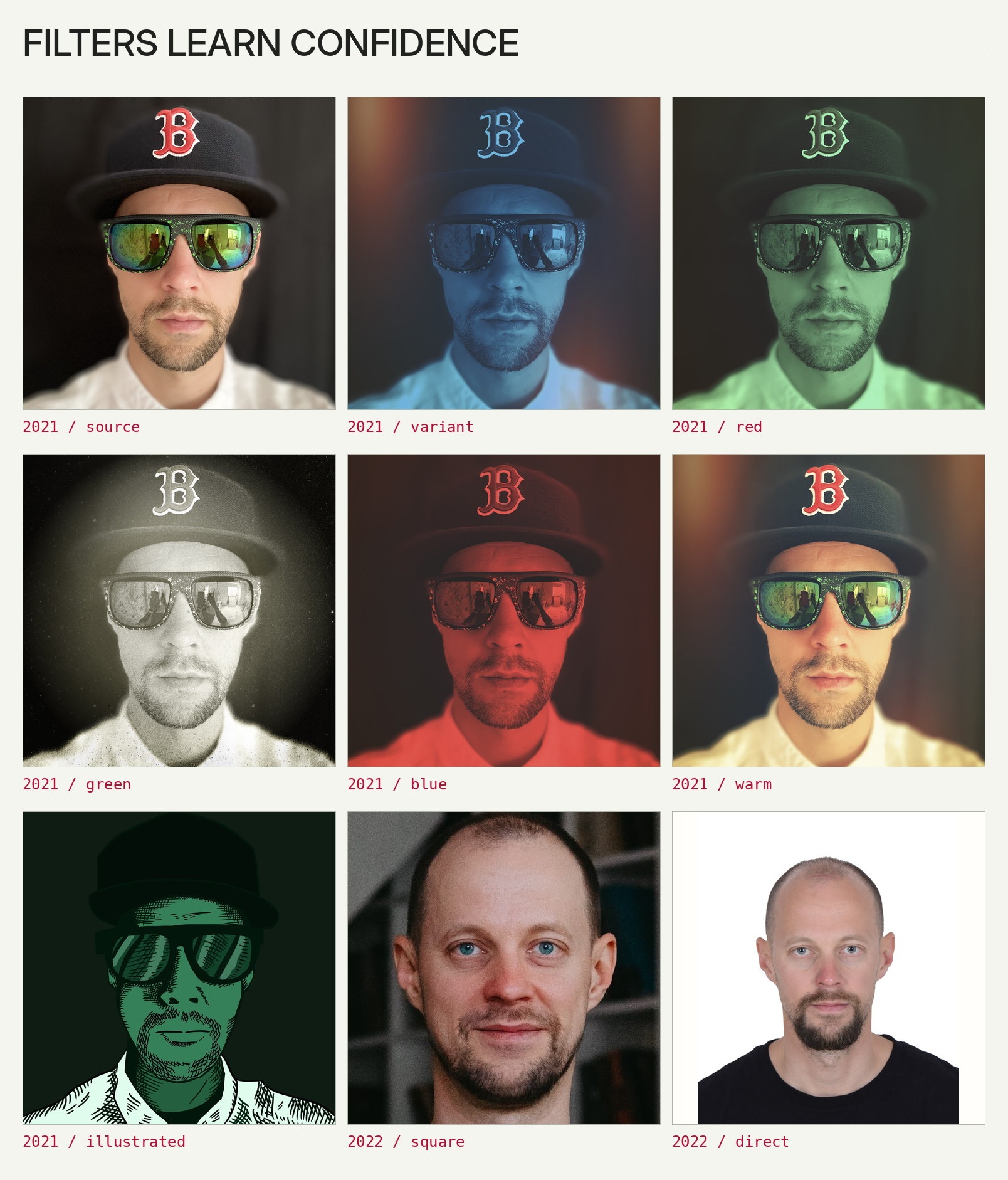
The technical process is faster now. The number of outputs remains high.
This is a recurring pattern in creative technology:
Tools reduce the time required to make one option, so humans respond by making twelve options.
The 2022 photographs briefly restore direct representation. The face is visible, conventionally lit and not disguised as an album cover.
This calm is temporary.
11. The synthetic population explosion, 2023
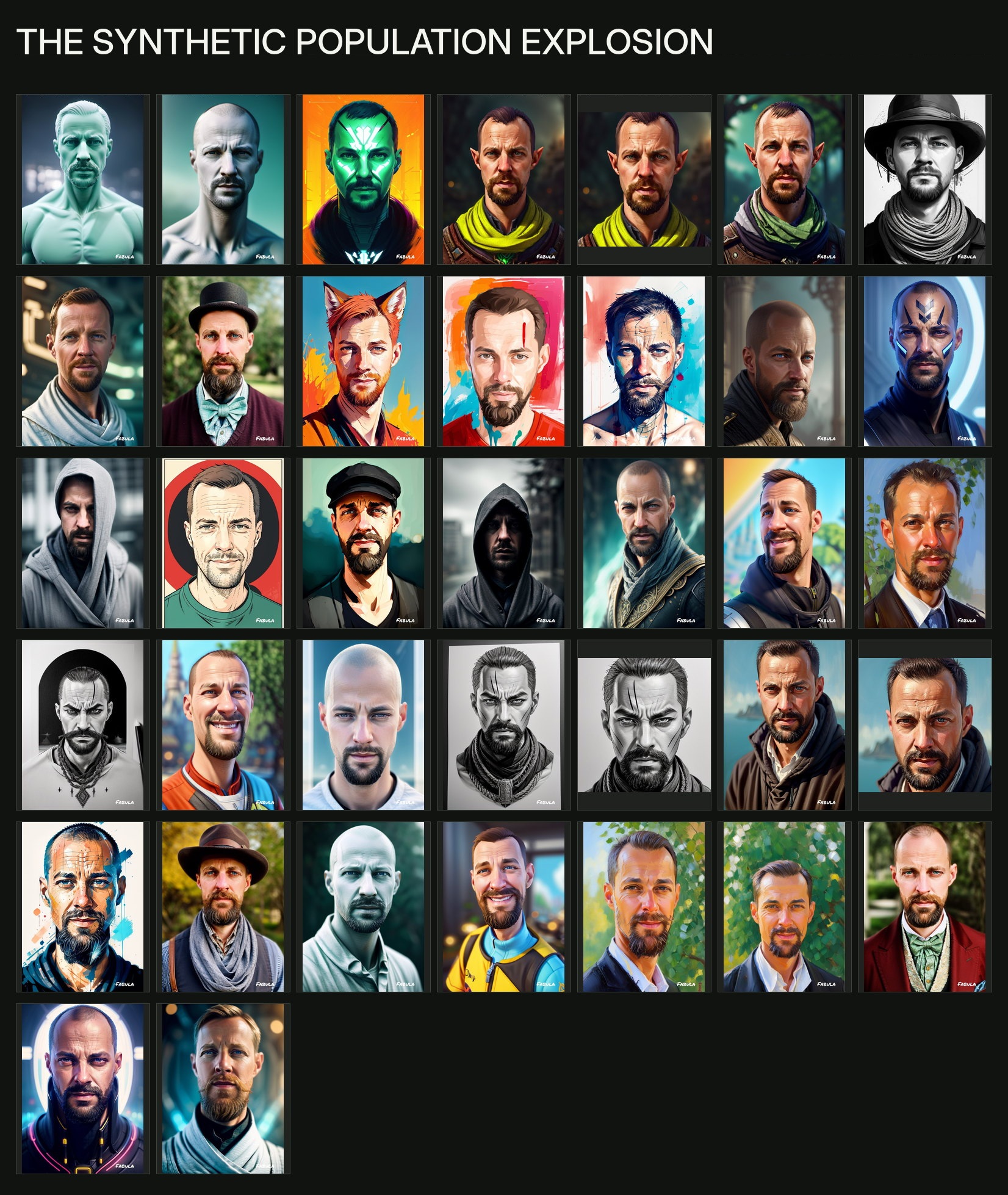
In July 2023, the archive experiences a demographic event.
Thirty-seven synthetic portraits appear in one folder.
They include:
- bald men;
- bearded men;
- men with hair;
- men in hats;
- men in cloaks;
- men who appear to have completed military campaigns in fictional countries;
- one man with fox ears;
- and several plausible strangers who seem confident that they belong here.
The source face is no longer being edited. It is being interpreted.
At this point the avatar becomes a negotiation between identity and statistical likelihood. The machine does not ask, “What does this person look like?” It asks something closer to:
“What sort of person might exist near these pixels?”
The answer varies dramatically.
Some outputs preserve the eyes but replace the jaw. Others preserve the head shape but invent a beard. Several simply retain the general atmosphere of “adult male looking at camera” and consider the investigation complete.
The subject has become a prompt.
12. The vector interlude, 2024
Three images from 2024 return to illustration.
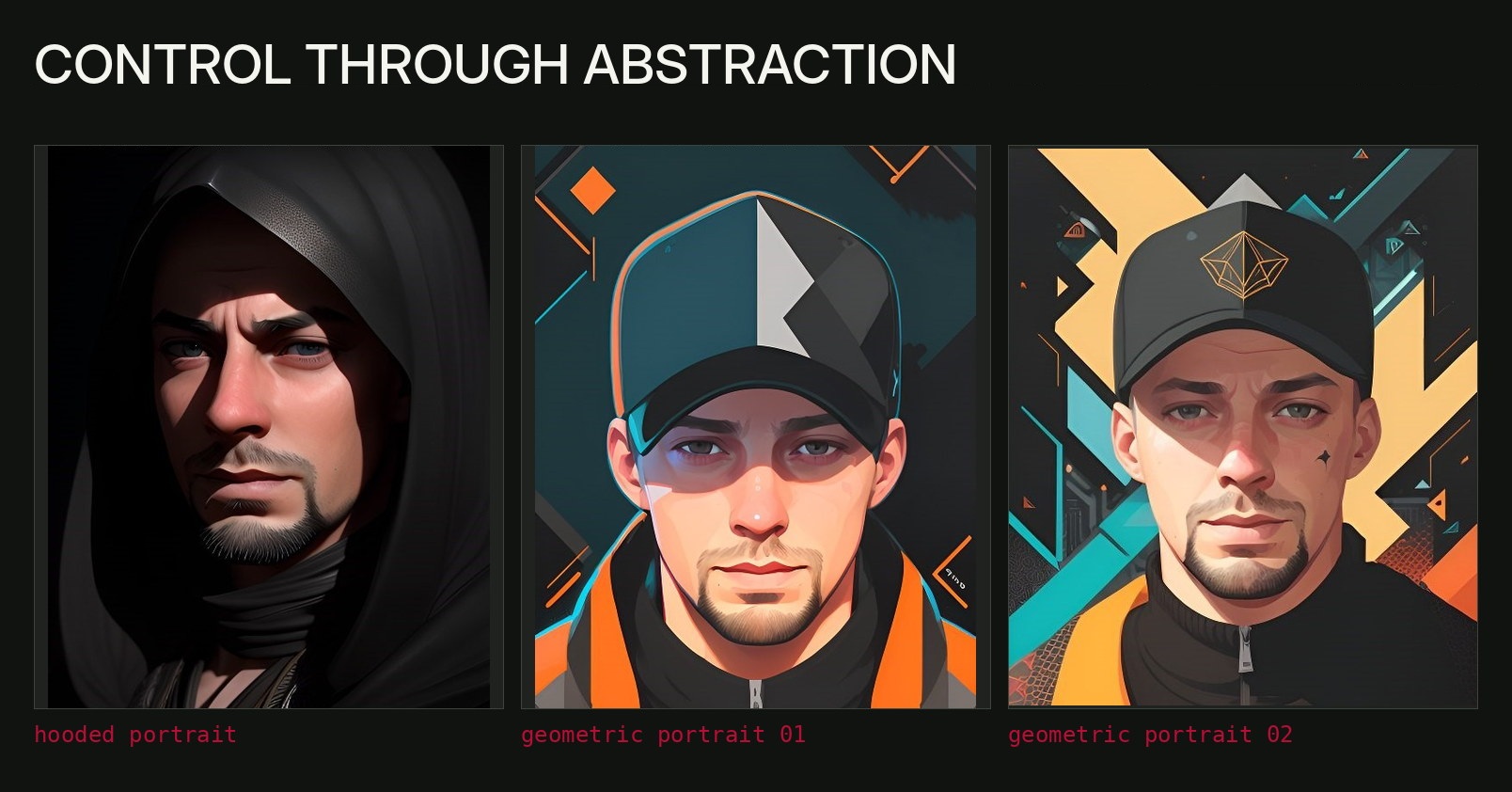
These are not especially accurate, but they do not pretend to be.
That distinction matters.
A stylised portrait can simplify a face while remaining convincing because the viewer accepts the rules of illustration. A photorealistic generated portrait is judged against the far less forgiving rules of recognition.
Stylisation says: this is an interpretation.
Synthetic photography says: this is exactly you, shortly before producing a man who might sell you specialised insurance.
13. The 2026 calibration hearing
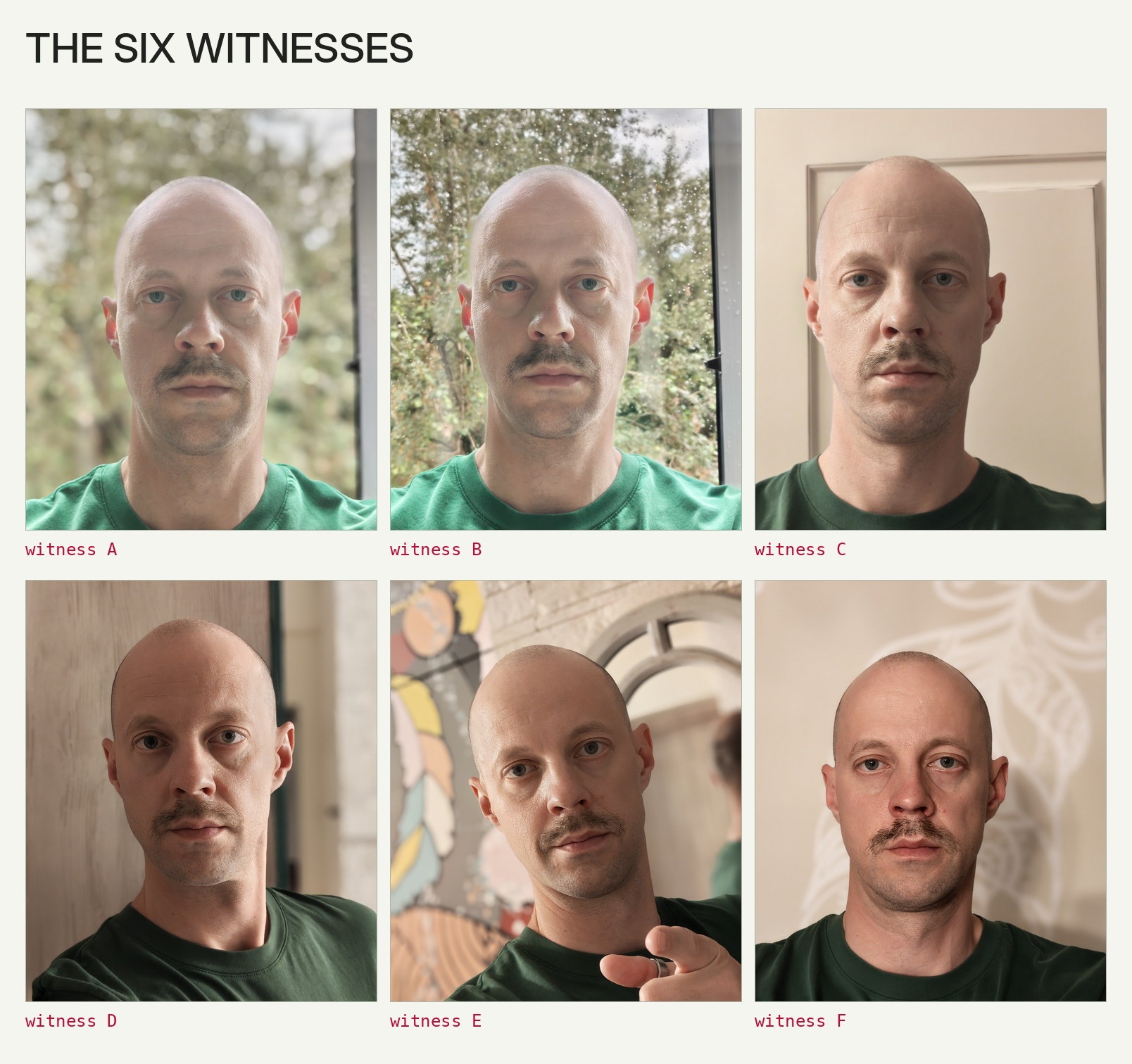
In 2026, six photographs were submitted for a new Telegram avatar.
The evidence was unusually strong:
- multiple frontal views;
- one mild three-quarter angle;
- consistent clothing;
- visible eyes;
- natural skin texture;
- and no hats, sunglasses, QR codes or fox ears.
The model was asked to combine the most reliable identity reference, the best lighting and the most relaxed expression.
It produced a handsome, coherent studio portrait.
The face was slightly too wide.
A correction was requested.
The next face was slightly too narrow.
A second correction was requested.
The next head became noticeably more egg-shaped.
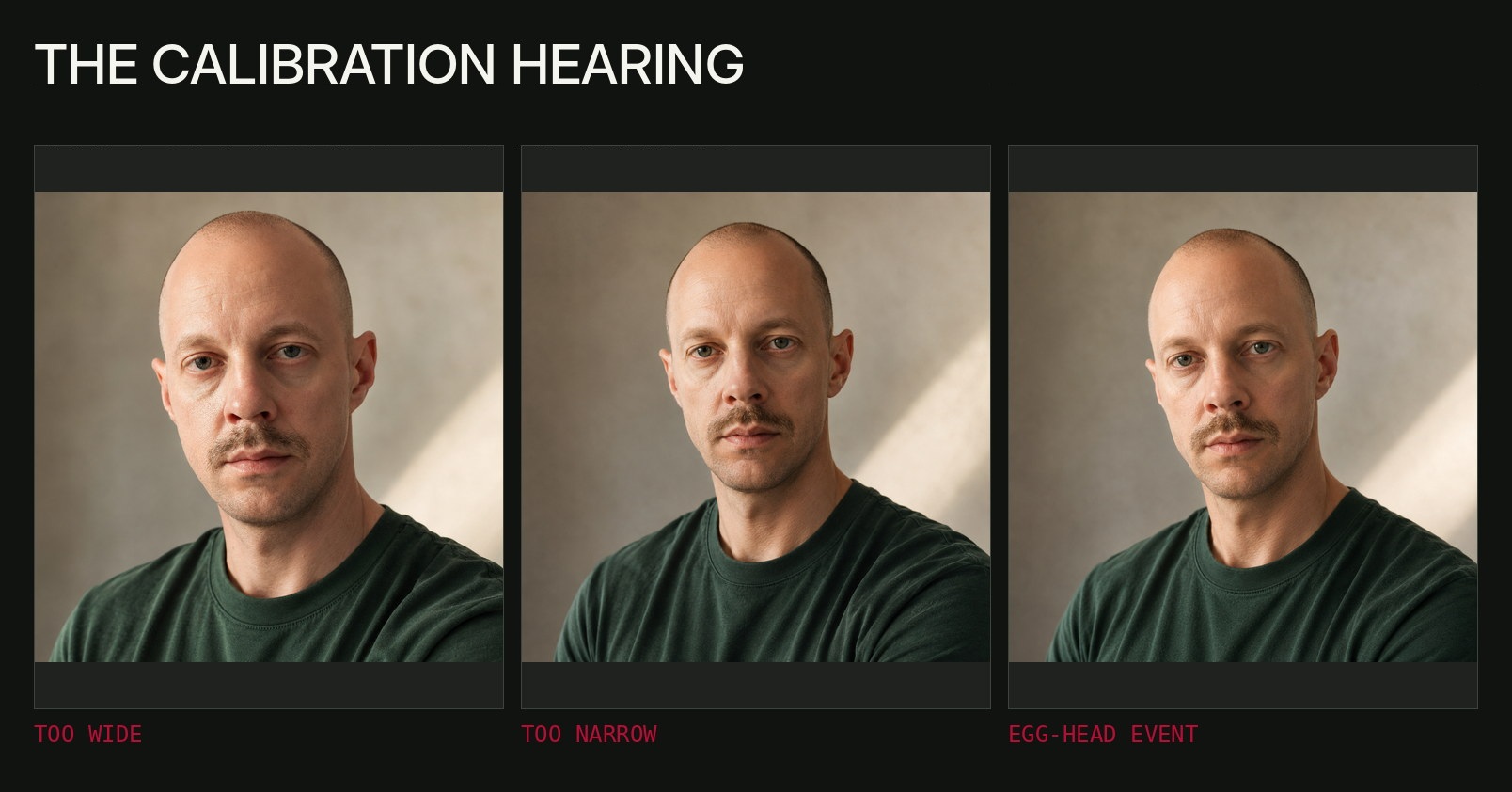
This sequence provides the clearest evidence that generative portraiture does not operate like a geometry editor.
The instruction “slightly narrower” does not reduce a measured dimension by three percent. It causes the model to reconsider the entire concept of the person.
Eyes change. The forehead changes. The moustache acquires opinions. The skull enters a new administrative region.
The process resembles adjusting a chair by rebuilding the room.
14. Contamination of the evidence
The most significant procedural failure occurred when the image model was asked to compare the generated portraits with the original photographs.
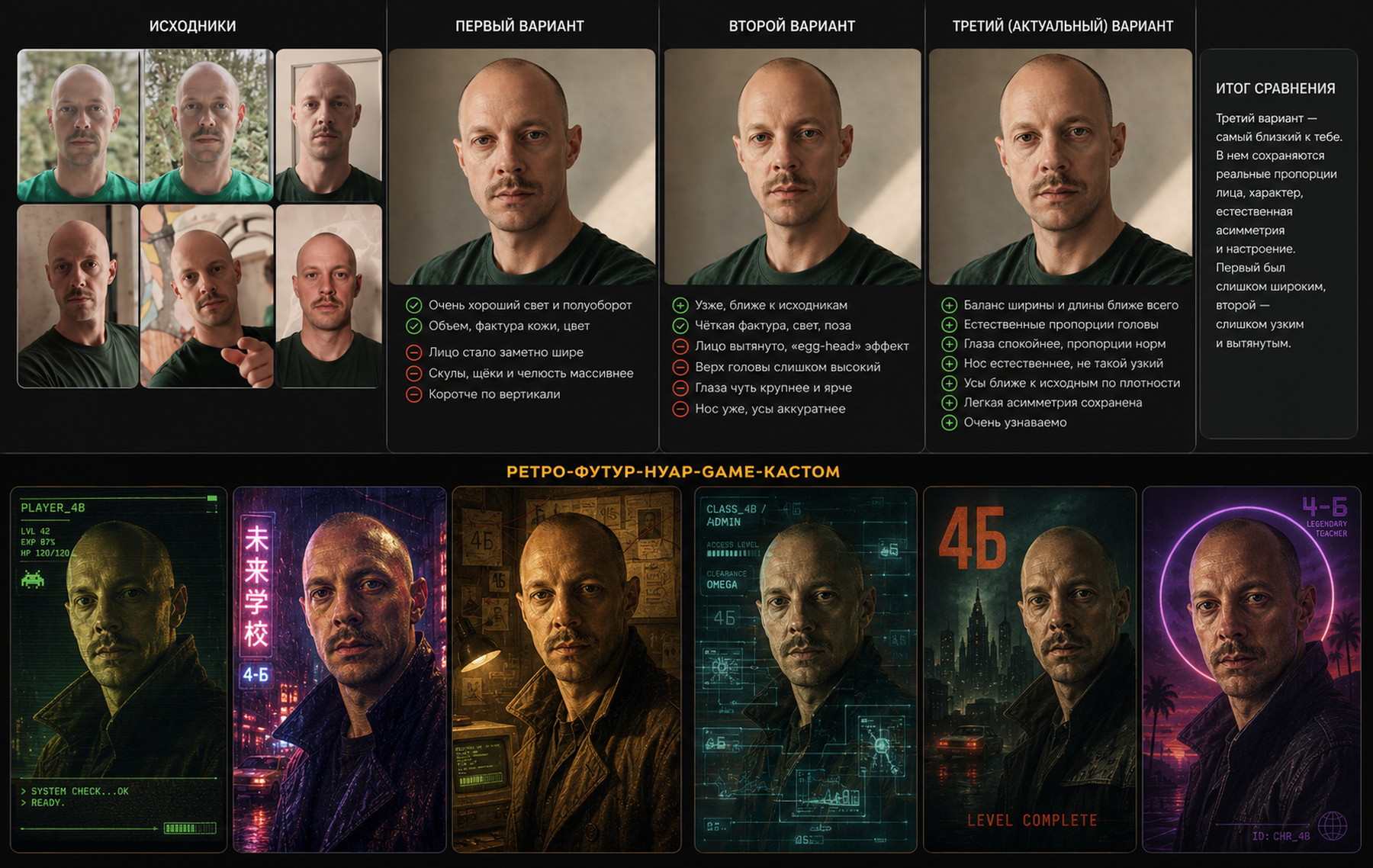
It produced an impressive analytical board.
Unfortunately, it regenerated the original photographs as well.
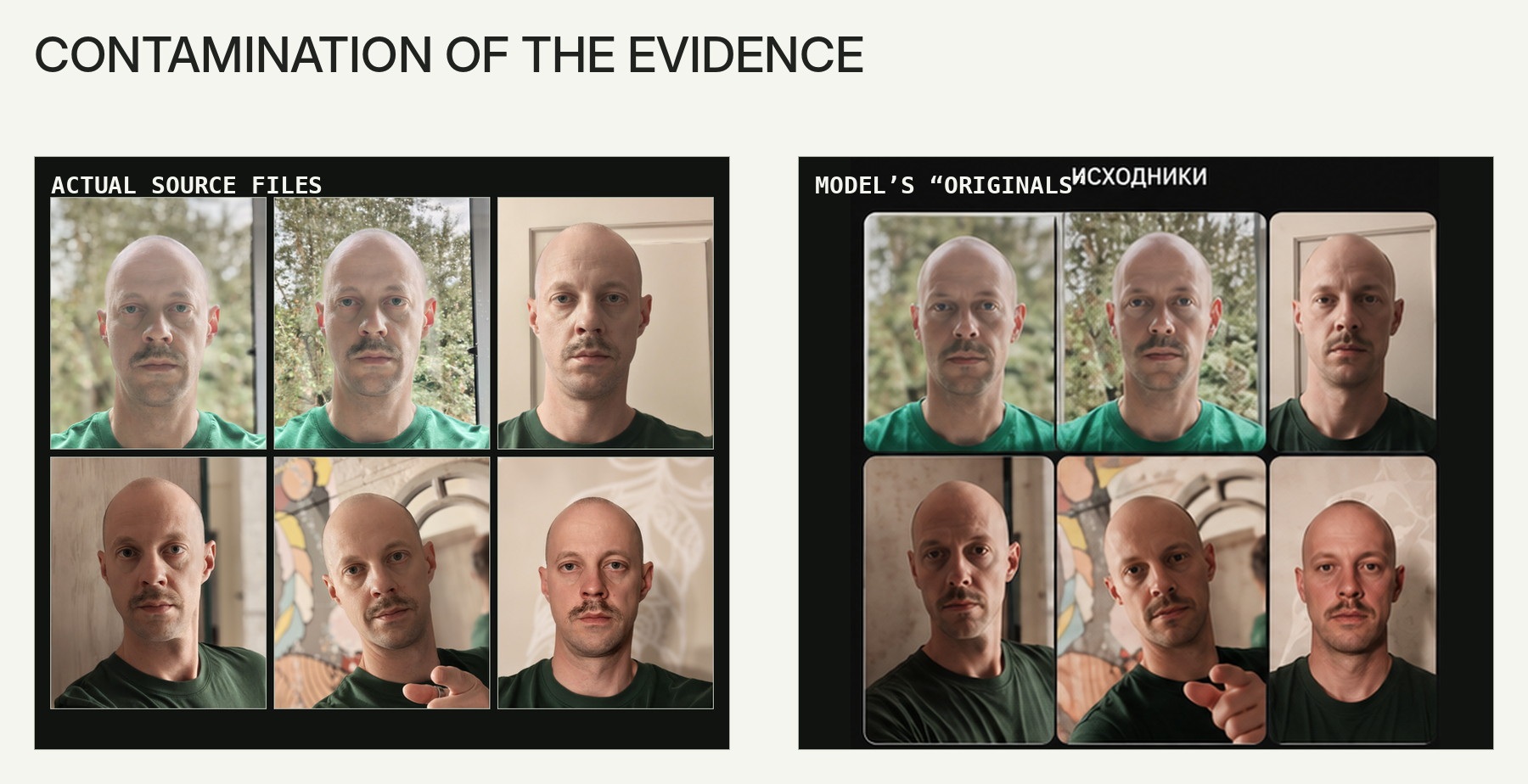
The machine altered the source evidence, compared the altered evidence with its own results and issued a confident conclusion.
In scientific terms, this is considered poor practice.
In artificial intelligence terms, it was Tuesday.
The same board also introduced labels connected to an unrelated project about class 4Б, including:
CLASS_4B / ADMIN;4-Б LEGENDARY TEACHER.
The subject had not been a teacher of class 4Б.
The model had simply encountered the information elsewhere and assigned him a new career.
This is the first documented case in the archive of an avatar system performing both facial synthesis and unsolicited employment placement.
15. Results
Several findings emerge from the full chronology.
15.1 The avatar records the tool more faithfully than the face
The 2009 images describe brushes and layer masks.
The 2011 images describe mobile cameras and QR enthusiasm.
The 2019 images describe duotone filters and platform-ready squares.
The 2023 images describe generative abundance.
The 2026 images describe the strange new activity of verbally negotiating facial geometry with software.
The face changes gradually.
The interface changes violently.
15.2 Technical convenience does not reduce production
Manual avatar construction required hours and produced several files.
Generative systems require seconds and produce several dozen files.
Efficiency has not reduced labour. It has converted labour into selection, comparison, criticism and increasingly specific conversations about whether a forehead has become too ambitious.
15.3 Recognition depends on small irregularities
The generated portraits often look polished. Some are excellent images.
Yet recognisability is frequently weakened by tiny corrections:
- excessive symmetry;
- cleaner facial hair;
- altered spacing;
- simplified contours;
- smoother expressions.
The features removed as “imperfections” are often precisely the features that identify the person.
This is inconvenient for systems trained to improve things.
15.4 The square is not neutral
Every image in the archive is affected by the anticipated crop.
Heads move towards the centre. Shoulders disappear. Backgrounds become fields of colour. Sunglasses, hats, hands and QR codes become structural elements.
The avatar is not merely a reduced portrait.
It is a distinct format with its own behavioural demands.
The current cover repeats this experiment in public. Ten exact archive images from 2008 to 2026 were mechanically aligned and averaged inside a 4:3 frame. To fill the rectangle, the face moved forward, the shoulders receded, and parts of the head and earlier layers disappeared beyond the edges.
The crop did not merely contain the portrait. It edited the person.
15.5 Every avatar is partly fictional
The early compositions were obviously constructed.
The later photographs looked more direct but still depended on selection, crop and colour.
The generative images merely make the fiction easier to see.
The question was never whether the avatar was authentic.
The question was which kind of artificiality felt accurate.
16. Discussion
Erving Goffman described social identity as a performance long before social platforms placed a tiny square beside every sentence.
The avatar is that performance compressed into an icon.
It functions as:
- a portrait;
- a signature;
- a costume;
- a status indicator;
- a miniature design project;
- and occasionally a warning that the owner has recently discovered a new filter.
It might also be understood as a digital extended phenotype: a designed object outside the body that nevertheless influences how the person is perceived.
This sounds impressive enough to justify the archive retrospectively.
It should not be trusted completely.
Most of these images were probably made because they looked interesting at the time.
That is sufficient.
Conclusion
Across eighteen years, the avatar changes from handcrafted graphic object to filtered photograph, from repeated visual mark to synthetic population.
The archive does not reveal a steady progression towards a final, accurate self-image.
It reveals a series of temporary agreements between one face and the technology available to represent it.
Every period believed it had found a better method.
Every method produced both a useful image and fresh evidence that the matter remained unresolved.
The current investigation therefore ends without selecting a definitive avatar.
The subject is still recognisable.
The file remains open.
Notes from the laboratory
- No avatars were harmed during this study. Several were given careers without consent.
- The phrase egg-head event is retained as a technical term pending peer review.
- The archive contains nine PSD and four XCF files, demonstrating that the subject once believed flattening an image was a reversible life decision.
- The four
.picasa.inifiles declined to comment. - A future model may solve the problem by generating an avatar that looks exactly like the subject. It will then probably add a hat.
References
Goffman, Erving. The Presentation of Self in Everyday Life.
Useful for understanding why a profile image is never merely a profile image.
Mori, Masahiro. The Uncanny Valley.
Useful for understanding why an almost-correct face may feel less correct than a drawing.
The CLINDUST Avatar Archive, 2008–2026.
Unpublished working files, exports, experiments and digital witnesses of varying reliability.
ChatGPT portrait session, 2026.
Proceedings of the Width, Narrowness and Egg-Head Hearings.